FreightWaves hosted a cargo theft hackathon at F3 last year, where one concept that emerged was the idea of a “kill chain” — the sequence of points where freight can be exploited, from tendering through delivery.
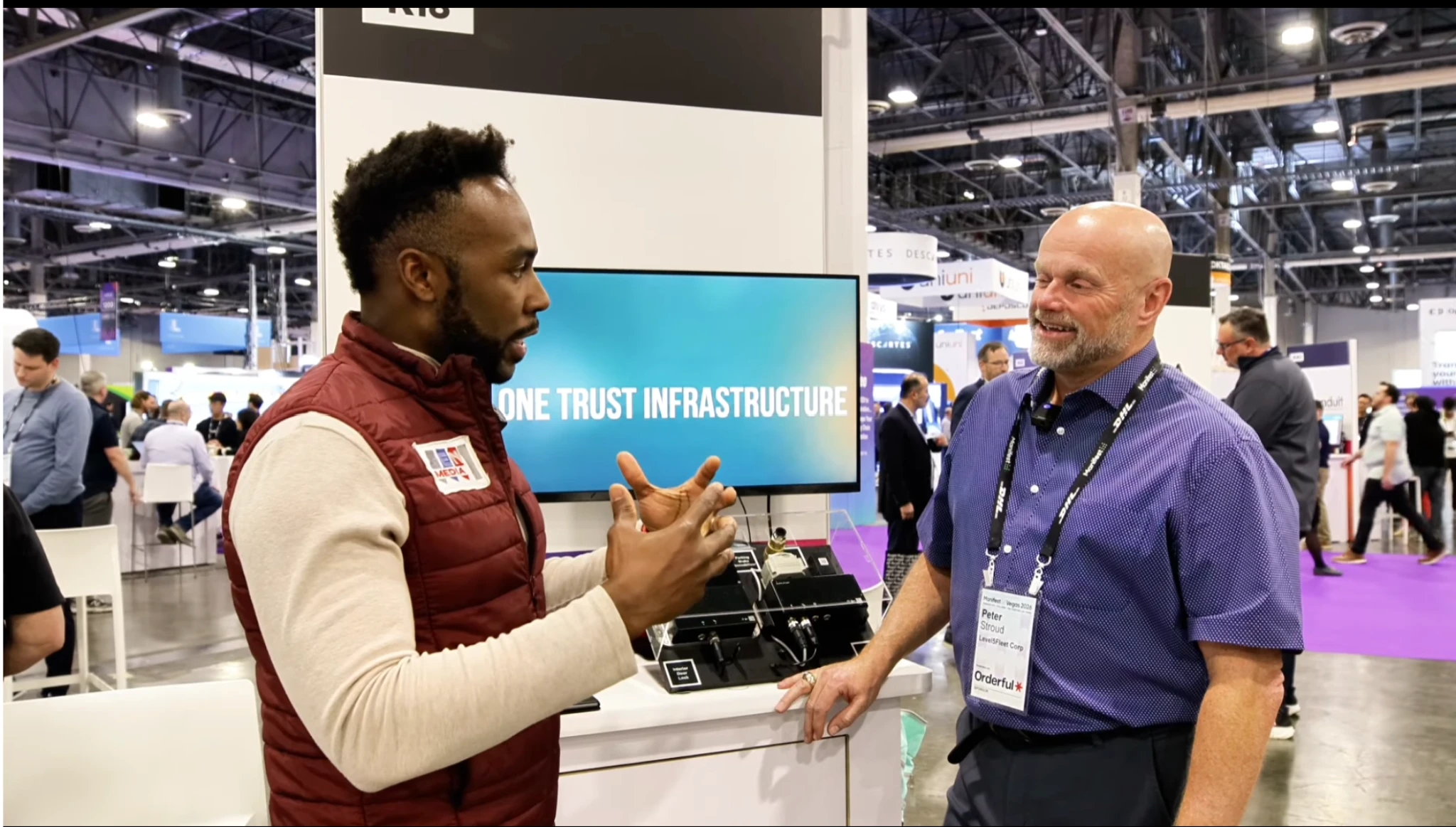
SEN 1 media spoke with us at Manifest 2026 about how these incidents are evolving.
When you look at the problem through that lens, a pattern starts to emerge.
At the beginning of the chain, the industry has made real progress. There are now effective ways to reduce exposure before a load is ever accepted. Screening tools help identify risky actors, and most operations have strengthened their onboarding and vetting processes.
At the other end, visibility has improved response. Tracking, alerts, and recovery workflows make it easier to react when something has already gone wrong.
But between those two points lies the part of the chain where execution actually happens. Where loads are picked up, handed off, and moved under real-world conditions. That is also where most incidents take shape.
What happens in that middle is often treated as a single problem, but in practice there are two distinct failure modes.
The first is unauthorized execution. In these cases, actors do not break into the system from the outside. They insert themselves into it. Decisions are pushed through under time pressure — a last-minute change, a rescheduled appointment, a substituted driver or piece of equipment. Due diligence is performed, but in the moment, under operational pressure, it becomes easier to accept ambiguity or rely on incomplete information. The exploit is not bypassing the process. It is operating within it.
The second is straight theft. Here, the exploit is not in the decision but in access. Once someone reaches the asset, there is often nothing that physically prevents movement or cargo access. The system may know something is wrong, but that knowledge does not translate into control.
These are different mechanisms, and they fail in different ways. One exploits how decisions are made. The other exploits what happens after access is gained. What they share is where they occur. It is in the middle of the chain, where execution is dynamic, time-constrained, and difficult to control.
Over time, the industry has become better at deciding who should be allowed to act, and better at responding when something goes wrong. But the moment where actions actually take place remains largely unconstrained.
That is where the next shift is starting to emerge.
It is not about adding more checks or more visibility. It is about how execution itself is handled: whether authorization can be clearly defined at the moment an action is taken, whether that authorization can be proven rather than inferred, and whether it can be enforced rather than simply observed.
This is the part of the system that has historically been left to procedures and judgment. It is also where most incidents take shape.
Stay Connected
Want more insights like this? Follow Level5Fleet for future articles, freight industry trends, and updates on building a smarter, more secure supply chain:
🔗 LinkedIn
🐦 X: @Level5fleet
📘 Facebook
📸 Instagram